
Cyber threats are no longer simple or predictable. Attackers are faster, more organised, and often automate themselves. Traditional security systems struggle to keep up with this pace. This is where AI automation in cybersecurity becomes critical. By combining machine learning with automated processes, businesses can detect, analyse, and respond to threats in real time. It shifts cybersecurity from reactive defence to proactive protection.
For organisations managing growing digital environments, AI automation is not an upgrade. It is a necessary step to maintain control, reduce risk, and respond to threats with speed and precision.
What Is AI Automation in Cybersecurity
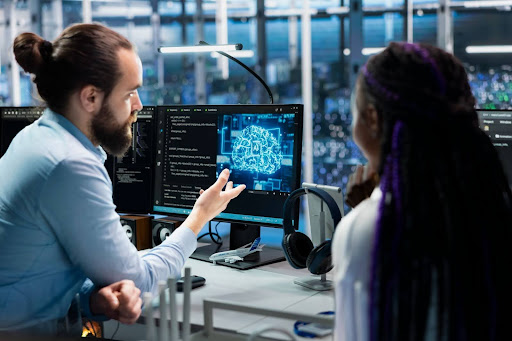
AI automation in cybersecurity is the use of artificial intelligence combined with automated workflows to protect systems, networks, and data. It allows security tools to detect threats, analyse behaviour, and take action without constant human involvement.
Instead of relying on manual monitoring, AI systems process large volumes of data, identify patterns, and flag unusual activity. Automation then executes predefined responses, such as isolating compromised devices or blocking suspicious access.
This combination reduces response time, improves accuracy, and allows security teams to focus on strategic decisions rather than repetitive tasks.
Why AI Automation Matters in Modern Cybersecurity

Modern cyber threats evolve quickly and operate at scale. Human-led security alone cannot process the volume of data generated across systems, networks, and devices. AI automation addresses this gap by providing continuous monitoring and rapid response.
It reduces the time between detection and action, which is critical in preventing breaches. It also helps organisations handle complex environments where multiple systems interact.
Without AI automation, security teams risk missing early warning signs. With it, they gain the ability to respond faster, reduce damage, and maintain a stronger security posture in an increasingly hostile digital landscape.
Core Capabilities of AI Automation in Cybersecurity
AI automation in cybersecurity delivers several key capabilities that strengthen how organisations manage threats and protect systems.
Threat Detection and Prediction
AI systems analyse large datasets to identify patterns linked to known threats, and they could be used for threat hunting. Instead of relying only on signature-based detection, they recognise unusual behaviour that may indicate an attack.
This allows early identification of risks such as malware, phishing attempts, or unauthorised access. Predictive models also assess potential vulnerabilities before they are exploited.
As a result, organisations can act before damage occurs rather than responding after a breach has already happened.
Automated Incident Response
Once a threat is detected, automation enables immediate action. Systems can isolate affected devices, block malicious traffic, or trigger alerts without waiting for human input.
This significantly reduces response time, which is critical during active attacks. Automated workflows also ensure consistent incident handling in accordance with predefined rules.
By removing delays and manual errors, organisations can contain threats faster and minimise operational disruption.
Behavioural Analysis
AI monitors user and system behaviour to establish a baseline of normal activity. When deviations occur, such as unusual login patterns or data access, the system flags them as potential risks.
This approach is effective against insider threats and sophisticated attacks that bypass traditional security measures.
Behavioural analysis provides deeper visibility into how systems are used, allowing security teams to detect subtle threats that would otherwise go unnoticed.
Security Orchestration
AI automation in cybersecurity integrates multiple security tools into a unified system. This allows data to flow between platforms and enables coordinated responses across multiple security layers.
For example, a detected threat in one system can trigger actions in others, creating a connected defence strategy.
Security orchestration reduces complexity, improves efficiency, and ensures that all tools work together rather than in isolation.
Continuous Learning Systems
AI systems improve over time by learning from new data and past incidents. This continuous learning process allows them to adapt to evolving threats and refine detection models.
As cyber threats change, the system updates its understanding and response strategies.
This ensures that security measures remain relevant and effective without constant manual reconfiguration.
Real-World Use Cases of AI Automation in Cybersecurity
AI automation is already applied across various industries. Financial institutions use it to detect fraudulent transactions in real time. Healthcare providers rely on it to protect sensitive patient data from breaches.
Large enterprises deploy AI-driven systems to monitor network activity and respond to threats across global operations. It is also used in email security to filter phishing attempts and in endpoint protection to detect malware.
These applications demonstrate how AI automation supports faster decisions, stronger protection, and better management of complex digital environments.
Benefits of AI Automation in Cybersecurity
AI automation in cybersecurity delivers clear operational and strategic benefits. It improves threat detection accuracy by analysing large volumes of data that humans cannot process efficiently.
It also reduces response time, which is critical for limiting the impact of cyberattacks. Automation lowers the workload on security teams, allowing them to focus on higher-value tasks such as strategy and risk management.
In addition, it enhances consistency in incident handling and reduces human error. Overall, organisations gain stronger protection, improved efficiency, and better resource use.
Challenges and Limitations

Despite its advantages, AI automation in cybersecurity comes with challenges. Implementation can be complex and requires integration with existing systems. Poorly configured models may produce false positives or miss certain threats.
There is also a reliance on data quality. Inaccurate or incomplete data can affect system performance.
Cost is another factor, especially for smaller organisations. AI systems require investment in infrastructure and ongoing maintenance.
Finally, AI cannot replace human judgment. Strategic decisions and complex investigations still require experienced professionals.
The Future of AI Automation in Cybersecurity
AI automation in cybersecurity will continue to play a central role. As threats become more advanced, systems will rely more heavily on real-time analysis and automated response.
Future developments will likely focus on deeper platform integration, improved predictive capabilities, and more accurate behavioural analysis.
AI will also support proactive defence strategies, identifying vulnerabilities before they are exploited.
Organisations that adopt AI automation early will be better positioned to handle evolving threats and maintain a competitive advantage in security readiness.
How Businesses Can Start with AI Automation in Cybersecurity
Businesses should begin by assessing their current security gaps and identifying areas where automation can deliver immediate value. This often includes threat detection, incident response, and monitoring.
Choosing scalable solutions is important to ensure long-term flexibility. Integration with existing systems should be a priority to avoid operational disruption.
Working with experienced providers such as Fluxgate can simplify the process. They can help design and implement AI-driven security strategies that align with business needs.
Starting small, testing performance, and gradually expanding capabilities is the most practical approach to adopting AI automation effectively.
Frequently Asked Questions
What is AI automation in cybersecurity?
AI automation in cybersecurity refers to the use of intelligent systems that can detect, analyse, and respond to threats without constant human input. It combines machine learning with automated workflows.
How does AI improve cybersecurity?
AI improves cybersecurity by identifying patterns, detecting anomalies, and responding to threats faster than manual processes. It can also adapt as new threats emerge.
Is AI automation replacing cybersecurity professionals?
No. AI supports professionals by handling repetitive tasks and providing insights. Human expertise remains essential for decision-making and strategy.
